In the first four months of 2026, I went from “I haven’t drawn in twenty years” to drawing every single day, building this website, and figuring out that surface pattern design was the thing I actually wanted to chase. I did most of it on a budget. The one course I paid real money for was worth it, but it wasn’t where I should have started.
You don’t need to spend a lot, and you don’t need to feel ready. You need to begin, and you need to treat it like your job.
Where I started: a mind map and a hunch.
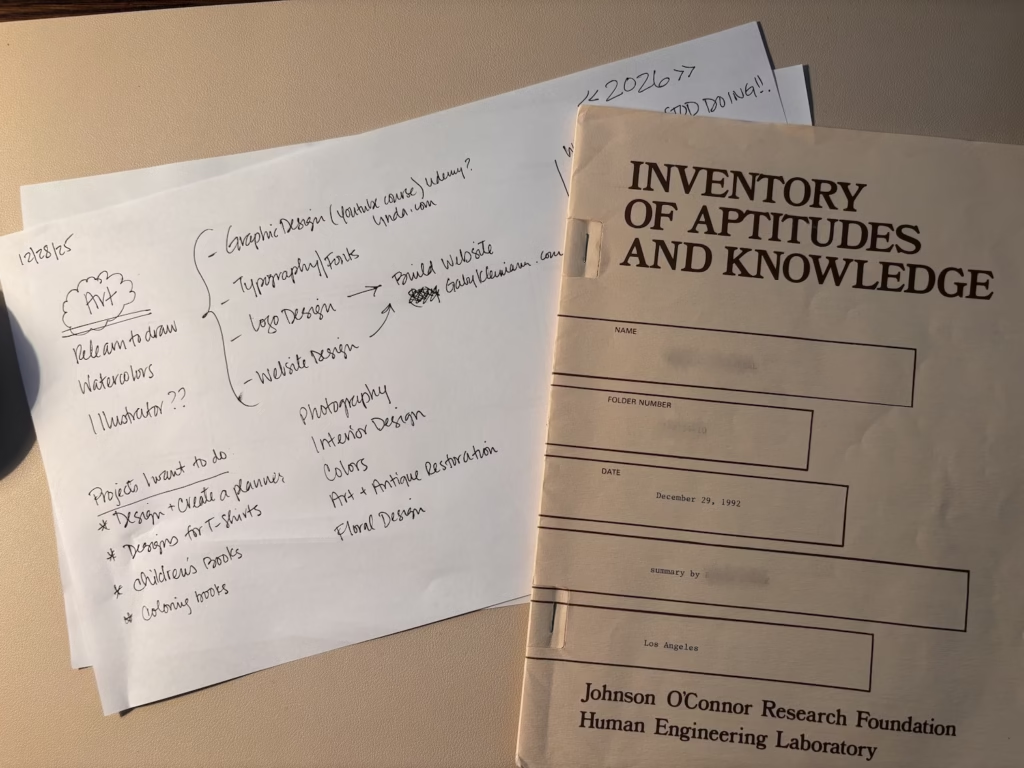
In late December / early January, I sat down and made a mind map of everything I was curious about.
Not a business plan. Not a five-year vision. Just a map of where my attention kept going.
Graphic design was on there. Logo design. Typography. Building my own website. Going back to watercolors, which I hadn’t touched in years. I didn’t know yet that surface pattern design even had a name. I just knew I wanted to make things.
If you’re at the very start, do this before you buy anything. Map where your curiosity already goes. You’re not committing to a niche yet. You’re just noticing the pattern.
February: I found Procreate and started drawing again
In February I found Procreate, and I decided I wanted to learn the program properly.
The hard part wasn’t the app. The hard part was that I was rusty. Twenty-plus years rusty.
So I did the unglamorous thing. I found a few drawing prompts and committed to one drawing a day. Not a good drawing. A drawing. The point was reps, not results.
Effort counts twice. You can have all the natural ability in the world, but without the daily reps you don’t progress.
I’ll be honest about where I was: my early drawings were stiff and I knew it. But a daily prompt takes the decision out of it. You don’t sit there asking whether you feel inspired. You just show up. Show up when it’s the last thing you want to do.
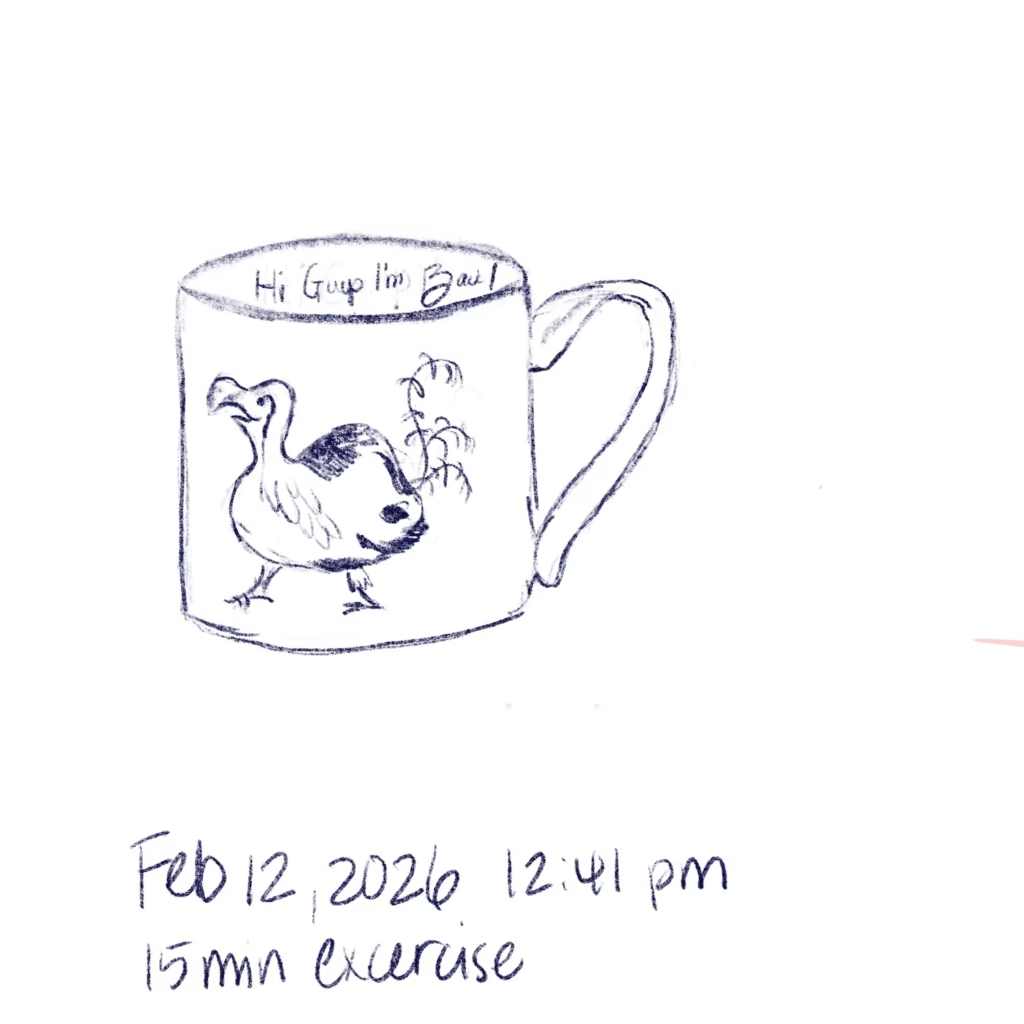
First day on Procreate 2.12.26

April 29, 2026
The planner problem (so I made my own).
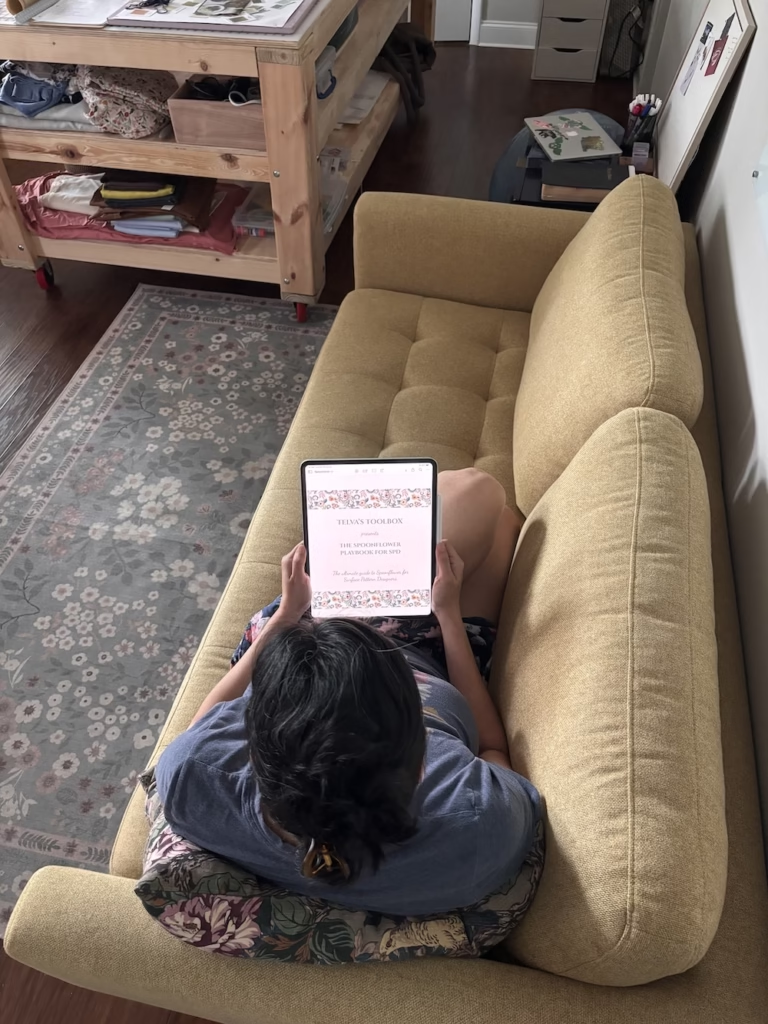
I wanted a planner to track my progress. Hours practiced, courses finished, what I was learning.
I went looking. I couldn’t find one I liked or that tracked the things I actually cared about.
So I made my own.
That sounds like a side quest, but it mattered more than I expected. The planner became the record of the whole quarter. Every course, every prompt, every small win went in it. When I felt like I had nothing to show for, the planner showed me I was actually moving.
If you can’t find the tool you need, that’s not a roadblock. That’s information. Build the simple version yourself. So my planner is a work in progress. Maybe one day I will print it.
Setting up a system before I set up a skill.
Here’s the step most people skip. I set up a system before I knew what I was doing.
In January, I created a separate Google Chrome profile with a brand-new Gmail address. One job: keep my learning life separate from my personal life.
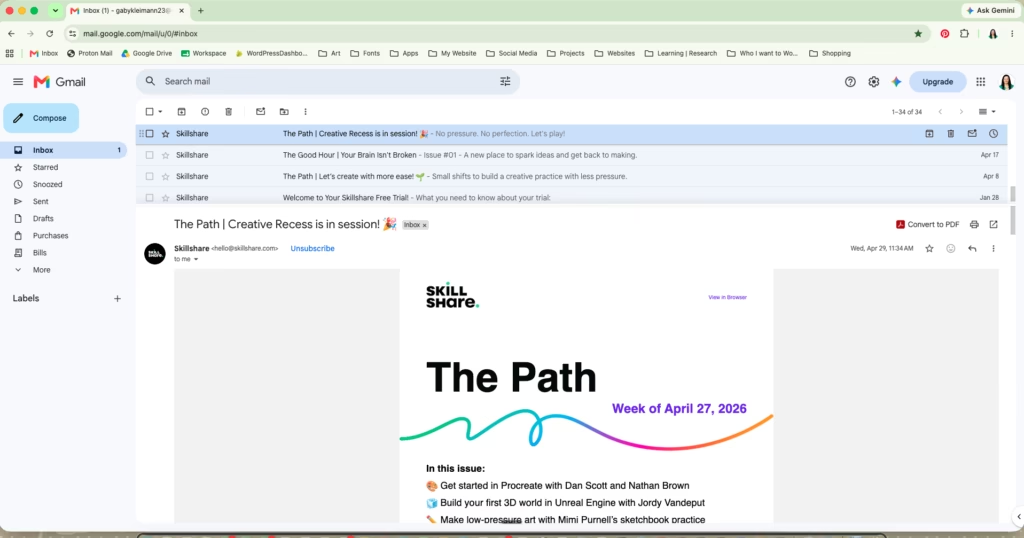
That new inbox is where I started curating newsletters from artists and educators I liked. My bookmarks bar became my research library. Everything in one place, away from the noise of my regular email.
Then I treated it like a job.
Open the inbox every day. Read. Delete and unsubscribe from what’s weak. Keep what’s useful. Keep researching.
This is the part I’d tell every (serious) beginner to copy. The skill takes months. The system you can build in an afternoon, and it compounds the entire time you’re learning.
Free first: where I actually learned the most.
I decided to give art a shot on a low budget. (I have bought PLENTY of courses I never did anything with). I wanted to consume everything I could find for free before I spent a dollar. Here’s how the free resources actually shook out, ranked by how useful they were to me.
- LinkedIn Learning (free with my library card). If you have a library card, check whether it gets you a free subscription to LinkedIn Learning (this used to be Lynda.com). Mine did. I used it to take WordPress courses and build my website myself. I also took Ina Saltz’s Graphic Design Foundations: Typography, which I really enjoyed, plus a few drawing and painting basics to knock the rust off. My take: LinkedIn Learning leans techie. It’s excellent for the technical and foundational stuff, like building a site or understanding type.
- Skillshare (30-day free trial, then worth the year). My daughter, who designs clothing patterns, told me to check out Skillshare. She’s on it for the sewing courses. I got a 30-day free trial. Skillshare leans creative. I watched far more courses on design, drawing, Procreate, and Illustrator there than anywhere else. It’s also where the whole field opened up for me. Under the Design category alone, you’ll find graphic design, game design, interior design, immersive design, AI for design, and the one that I knew was the one: surface pattern design. If you’re trying to figure out what you want to do, spring for a year of Skillshare. The exploration alone is worth it.
- YouTube (free, but it cost me time). YouTube is free, and I’ll be straight with you about it. I found it to be a bit of a time sink early on. You spend a lot of time just finding relevant content, and then more time figuring out whether the teacher is any good. It’s so all over the place that the “free” starts costing you in hours. There’s great stuff on there. But when you’re a beginner who doesn’t yet know what good looks like, an organized course platform saves you from drowning.
March: The $2,000 course, and why I started it too early.
Somewhere deep in the Skillshare SPD courses, my algorithm found Bonnie Christine’s Immersion program.
It clicked for me. Now that I was certain this was the path I wanted to take, I’ll say it plainly: it was the easiest $2,000 I ever spent, and the course did not disappoint. As of today I am on the Module 4, and have followed along as best I could.
But here’s the honest part. Even though Immersion is billed for beginners, it was further along than where I actually was. I was still fighting my own rusty hands. I couldn’t get the most out of it because I hadn’t put in enough drawing practice yet.
That’s not a knock on the course. It’s a note on sequencing.
Match the resource to the stage you’re actually at, not the stage you wish you were at.
Save the big investment for when your hands have caught up to your ambition. I will keep drawing my daily prompt, chronicling everything in my planner, and plan to re-take Immersion next year, as an alumni. By then I should have a few collections under my belt.
What I’d do differently, in order.
If I could hand my January self a simple sequence, here it is.
- Make the mind map. Map your curiosity before you spend anything.
- Set up the system. New email, curated newsletters, a simple progress tracker. Treat the inbox like a job.
- Start the daily reps. One drawing a day, ugly or not, in your preferred medium.
- Use free first. Library-card LinkedIn Learning for foundations, a Skillshare trial to explore.
- Then invest. When your hands have caught up, pay for the deeper course and actually use it.
I did most of these. I just did number five before I’d fully done number three. That’s the one I’d reorder.
Your move…
You don’t find your passion by thinking about it. You find it along the way, and “along the way” means action. Exploration. Following an interest to see where it takes you.
Make your mind map. One page. Everything your attention keeps drifting toward, no filtering, no judging.
Then pick the single thing that pulled hardest and find one free course on it.
The dream is free. The work is where you pay.
One more thing, in case you need it. I did all of this while working full-time. Every bit of it happened in the evenings, the early mornings, and the weekends. That’s the whole deal with my Exploration year: every extra second goes here. And I already can’t believe how far I’ve come. This is the first entry in what I’m calling my Studio Notes, where I document the real process of learning surface pattern design from the ground up. What’s the one thing on your mind map that scares you a little? That’s usually the one worth chasing.
— Gaby