When you spend enough time around surface pattern design, one phrase starts following you everywhere. Signature style. Find your signature style. You need a signature style.
My first reaction was to push back on it.
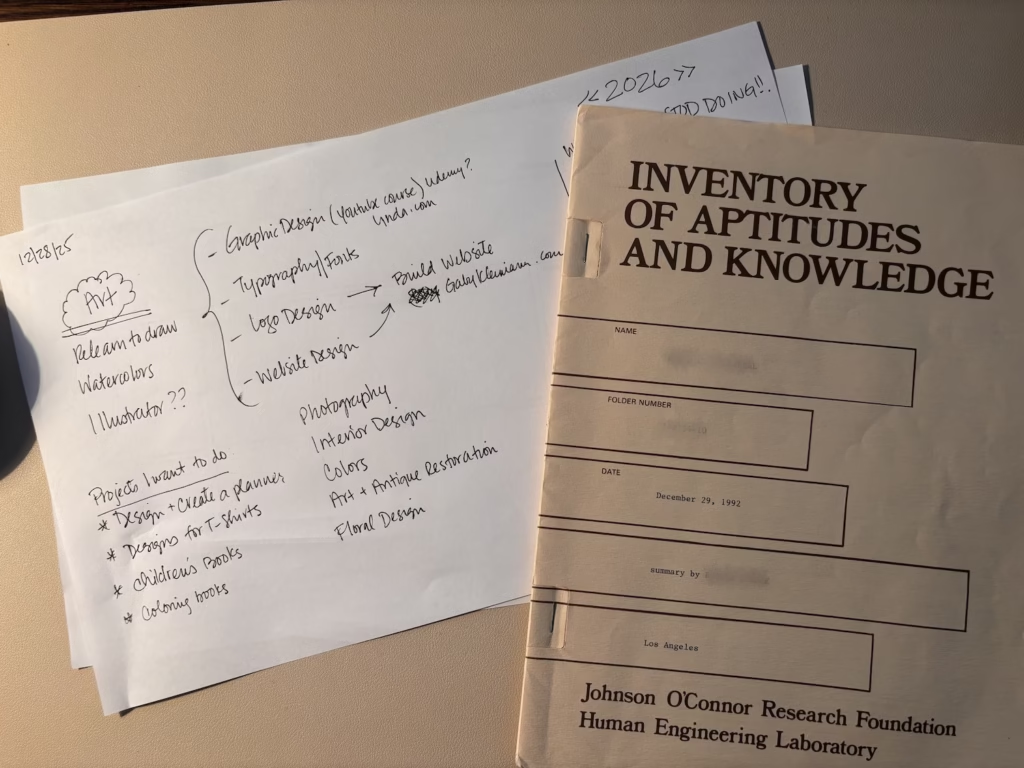
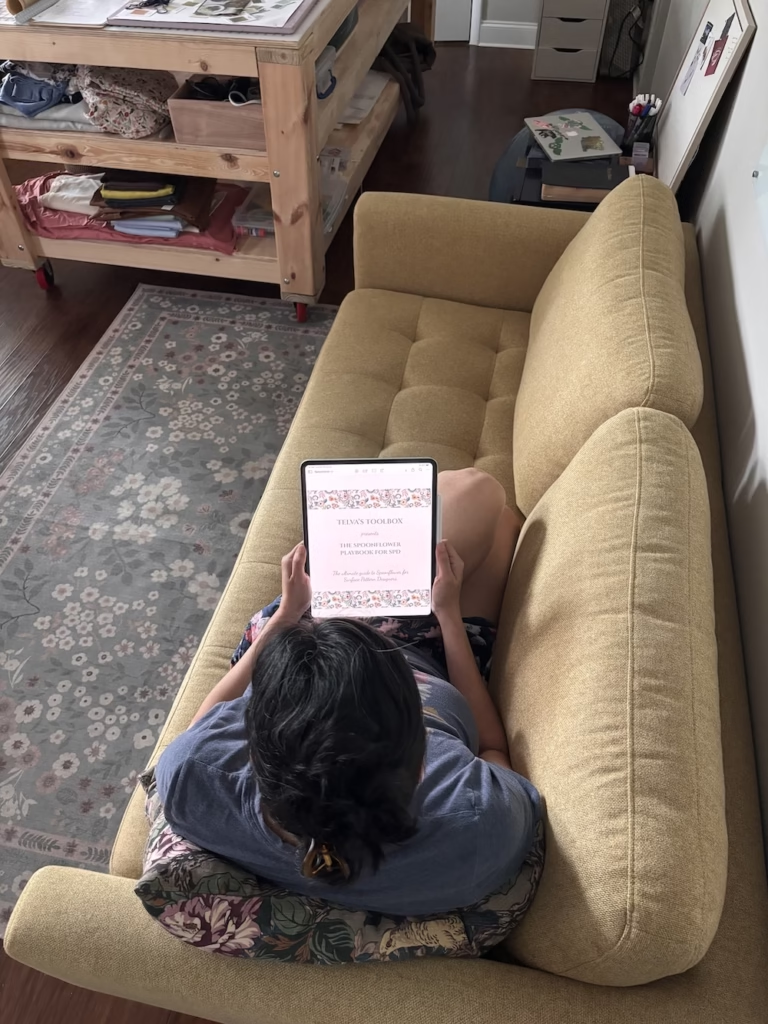
So, I went looking for how you actually get a signature style, and I went looking without wanting to pay for anything. Yes, there are $500 courses out there that will teach you. But what I found on my own is that the answer is mostly drawing, making patterns, attention, and patience, and that you can start building yours for free.
A signature style is not something you choose on a Tuesday. It is the residue of showing up, over and over, and paying attention to what keeps showing up with you.
That’s the whole post. Stay if you want the five things I’d actually start with.
Why I almost rejected signature style
When I first heard “you need a signature style,” it landed like a cage. I’m six months into this. I’m still figuring out whether I like painterly or geometric, whether I’m a color person or a two-tone person. Being told to pick a lane already felt like the wrong order.
But I understand the case for it, and it’s a good one. A recognizable style builds recognition, trust, and reliability. Art directors and customers start to know what they’re getting from you. You stop being one of ten thousand portfolios and start being the person who makes that thing. It’s the same reason it matters in fashion and branding. Consistency is what makes a name mean something. That’s the payoff.
So instead of paying for another course, I did some digging. Here’s what I found, sorted into five things a beginner can start now.
1. Draw every day, because style is a byproduct of volume
Nobody picks a signature style. It accumulates.
Every source I trust says some version of the same thing: your style emerges through consistent creation, not before it. You make a lot of work, and somewhere in the pile a common thread starts to repeat. That thread is the beginning of your style.
This is the one I already had a head start on, because I committed to one drawing a day back in February. Not a good drawing. A drawing. The point was always reps, not results.
You cannot find a thread in three pieces of work. You can start to see it in three hundred.
If you take nothing else from this post, draw today. Then draw tomorrow. The style conversation gets a lot easier once you have a body of work to look at.
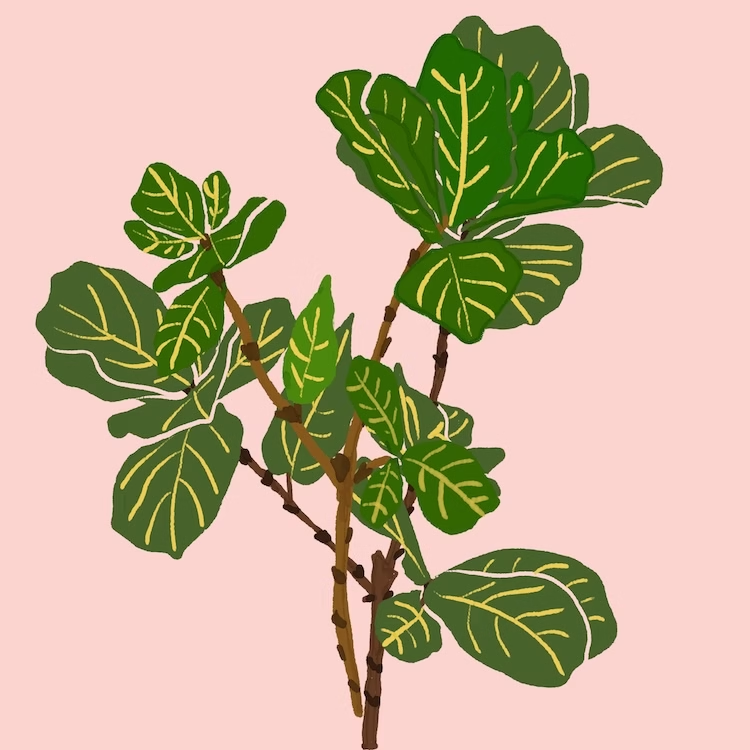
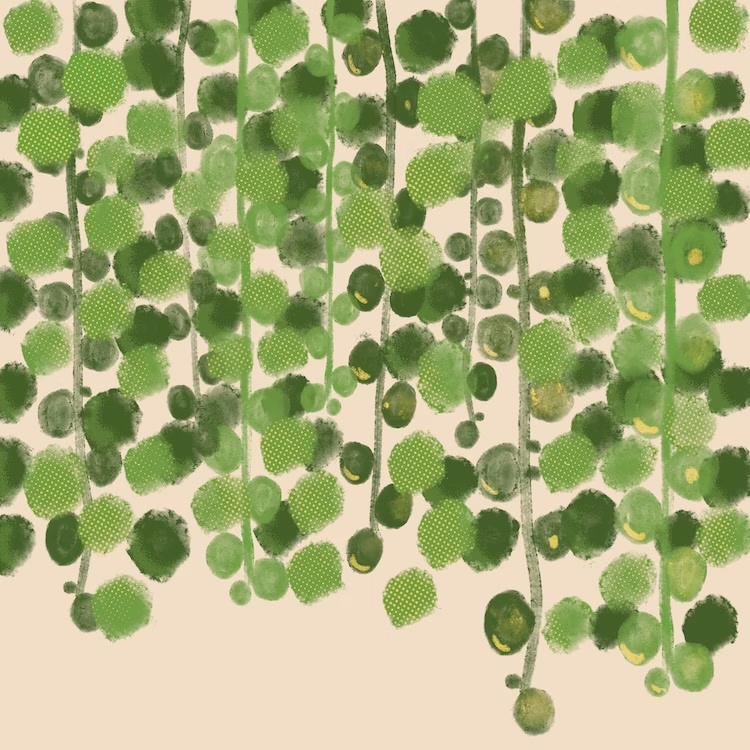
2. Audit what already stops you in your tracks
Before you try to invent a style, notice the one you already respond to.
Long before I knew surface pattern design had a name, I was the person stopping in Crate and Barrel, Pottery Barn, and Anthropologie to study a notebook or a baby blanket and think, “I could make that.” That wasn’t random. That was my taste pointing at itself.
So do an honest audit. Open the bookmarks, the saved posts, the photos on your phone. Walk the home goods aisle. What keeps catching you? Loose florals or tight geometrics? Muted and earthy or loud and saturated? Hand-painted texture or clean vector edges?
You’re not copying any of it. You’re collecting evidence about yourself.
3. Close the algorithm before you create
This one surprised me, but it comes up again and again from working designers, and it rings true.
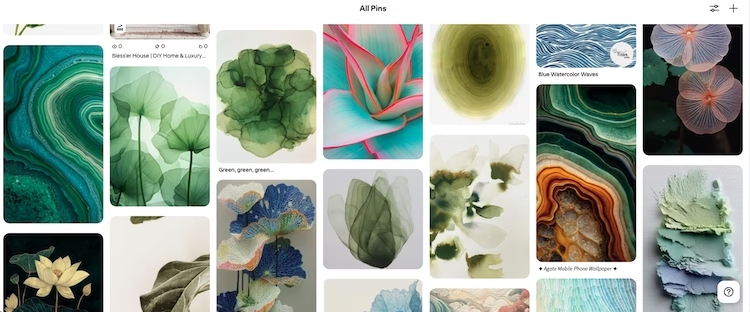
If you scroll Instagram or Pinterest right before you sit down to draw, you carry all of that in with you. Other people’s work bleeds into yours, and it gets harder to hear your own voice underneath the noise.
There’s a real irony here. The same algorithm that introduced me to Jillian Nichole and Bonnie is the thing I now have to switch off when it’s time to make my own work. Inspiration and influence are not the same. One fills the tank; the other quietly drives the car.
So separate the two. Have your input time, where you study and save and learn. Then close the apps, and make your own marks from an empty room. Bonnie Christine makes the same point in her piece on discovering your signature style, and it’s worth a read once you’re done here.
4. Hunt for your common thread across different media
Here’s the part I’m in the middle of right now, so I’ll tell you what the research says and what I’m testing.
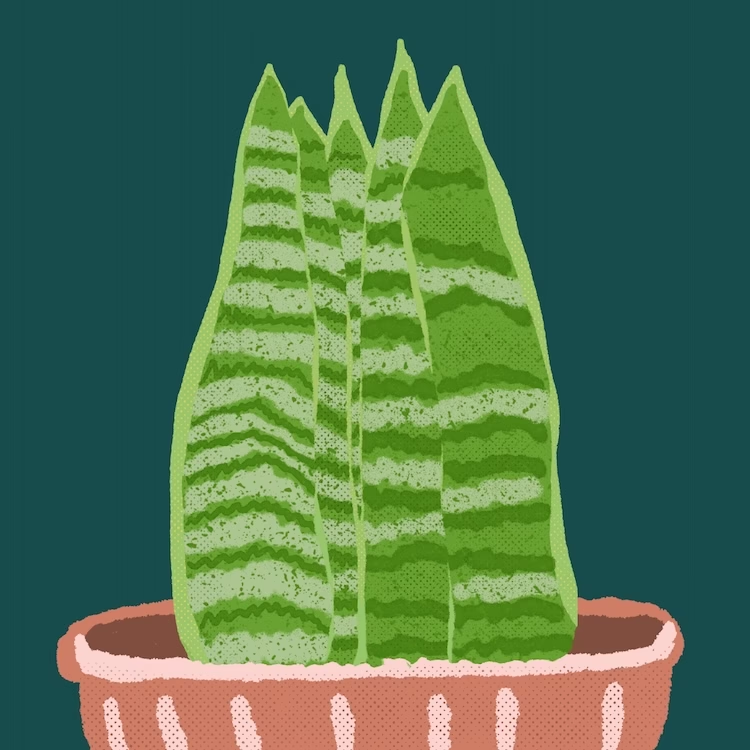
The fastest way to find a style is to experiment widely on purpose. Try fine-line drawing. Try loose watercolor. Try flat vector shapes in Illustrator. Try gouache. The goal isn’t to be good at all of them. The goal is to notice which one feels like home, and to spot the element that survives no matter which tool you pick up.
That surviving element is the real signal. Maybe your color choices stay recognizably yours whether you paint or draw. Maybe you always reach for a certain kind of imperfect line. Atisha Design Studio has a useful breakdown of finding that common thread, and a year of Skillshare is a cheap way to try a lot of media fast.
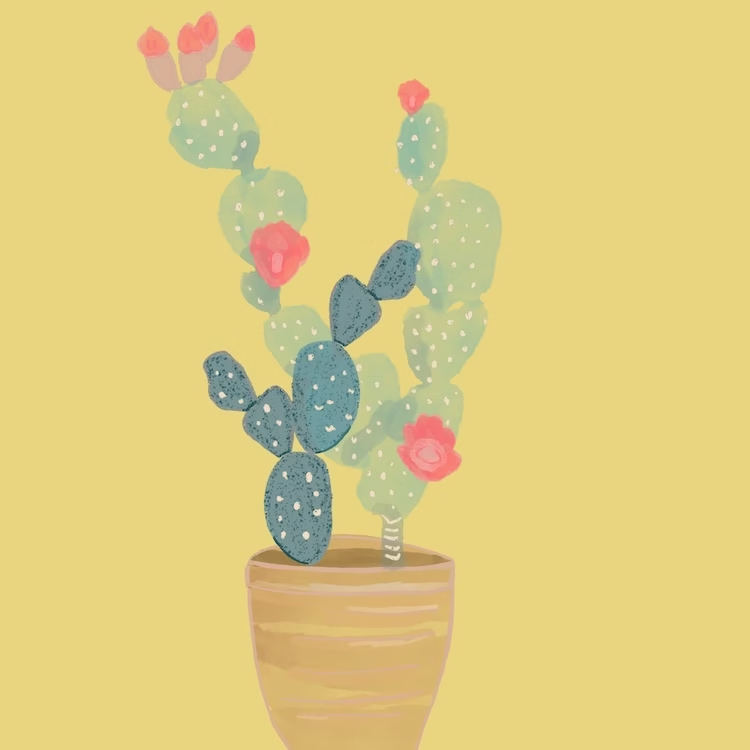
Here’s how this is actually playing out for me. I cast a wide net at the start and tried a little of everything. Six months in, I can feel the net tightening. Watercolor is winning. I reach for it over anything else, and I’m starting to recognize the specific colors I keep coming back to. I’ve also noticed I get almost no satisfaction from tracing something. I want to build it from scratch, even when that’s the harder road.
My tools have narrowed too. Procreate has become my favorite, especially after True Grit Texture Supply gave away a big set of free Procreate brushes that are genuinely good. Lately I’ve been combining the two preferences and making watercolor art inside Procreate. That’s not a signature style yet, but it is a thread, and it only showed up because I kept adding small constraints as my preferences got clearer.
Your style is not the medium. It’s the thing that stays the same when you change the medium.
5. Look back at the work you’ve already made
A single drawing can’t show a signature style. A handful, looked at together, can start to.
You don’t need to build a polished collection for this. You just need to look back. Pull up the daily pieces you already have and lay a few of them side by side. What keeps showing up? A color you reach for, a kind of line, a subject you can’t stop drawing. That repeating thing is your style showing you a draft of itself.
That’s the whole exercise. No new pressure, no forever-look to commit to. You’re just reading your own work back like evidence, and the thread gets a little clearer every time you do it.
The honest part: I haven’t found mine yet
I do not have my signature style yet. I’m six months in and still so uncertain about most everything. What changed isn’t that I found the answer. What changed is that I started treating it as a result I’m slowly earning.
That reframe took the pressure off. I don’t have to be recognizable today. I have to keep making work and keep paying attention, and the recognizable part takes care of itself over time. Every artist whose style you admire built it the slow way.
There’s no version where you find a short cut.
And I’m not the only one feeling the rush. I sat in on a course community where artists talk this out loud, and the same worry surfaces over and over. One person said what a lot of us were quietly thinking: we keep piling pressure on ourselves to have our signature style, when this is only the beginning. Another admitted she felt overwhelmed before she’d really started, stuck on choosing a color palette, asking how to get past the block.
Something to think about…
Stop trying to choose a signature style. Start collecting the evidence of one.
If you’re like me and like constraints because they take out the decision making, find some drawing prompts and create something every day or as consistently as you can.
So here’s an idea I found in all of my research:
Start a style audit in your own home.
Walk through your house and pay attention.
- What does your living room look like?
- What does the art on your walls look like?
- What colors do you keep drifting toward?
- What colors do you like to wear?
- What does your Pinterest board look like?
You’re not making anything yet. You’re noticing. Your taste has been leaving clues all over your life, and a slow walk through your own space is the fastest way to start reading them.
If you’ve been at this longer than me, I want to know: when did you first notice your own thread showing up?
— Gaby